When you picture the companies powering the artificial-intelligence boom, an oilfield-services giant is not the first name that comes to mind. Yet on Monday, August 31, 2026, before the opening bell, SLB N.V. (NYSE: SLB) — the company the world knew for decades as Schlumberger — announced it is buying its way into one of the least glamorous, most essential corners of the AI build-out: keeping data centers cool. SLB agreed to acquire Kelvion, a German maker of thermal-management and heat-exchange systems, for roughly $4.1 billion including assumed debt. Shares ticked up about 1% pre-market. The move is small relative to SLB’s size — but the idea behind it is a lot bigger than the price tag.
The deal, in one line
SLB is paying about $3.4 billion in cash plus roughly $0.7 billion of assumed debt — around $4.1 billion all in — to buy Kelvion from funds managed by Apollo (the majority sellers) and funds advised by Triton (a minority stake). Kelvion builds the industrial cooling and heat-exchange equipment that keeps heavy systems from overheating, and its single largest and fastest-growing business is cooling data centers. The deal is funded with cash, is expected to close in the first half of 2027 pending regulatory approval, and SLB says it will be accretive to earnings per share and free cash flow per share within twelve months of closing.
Why cooling is the AI story hiding in plain sight
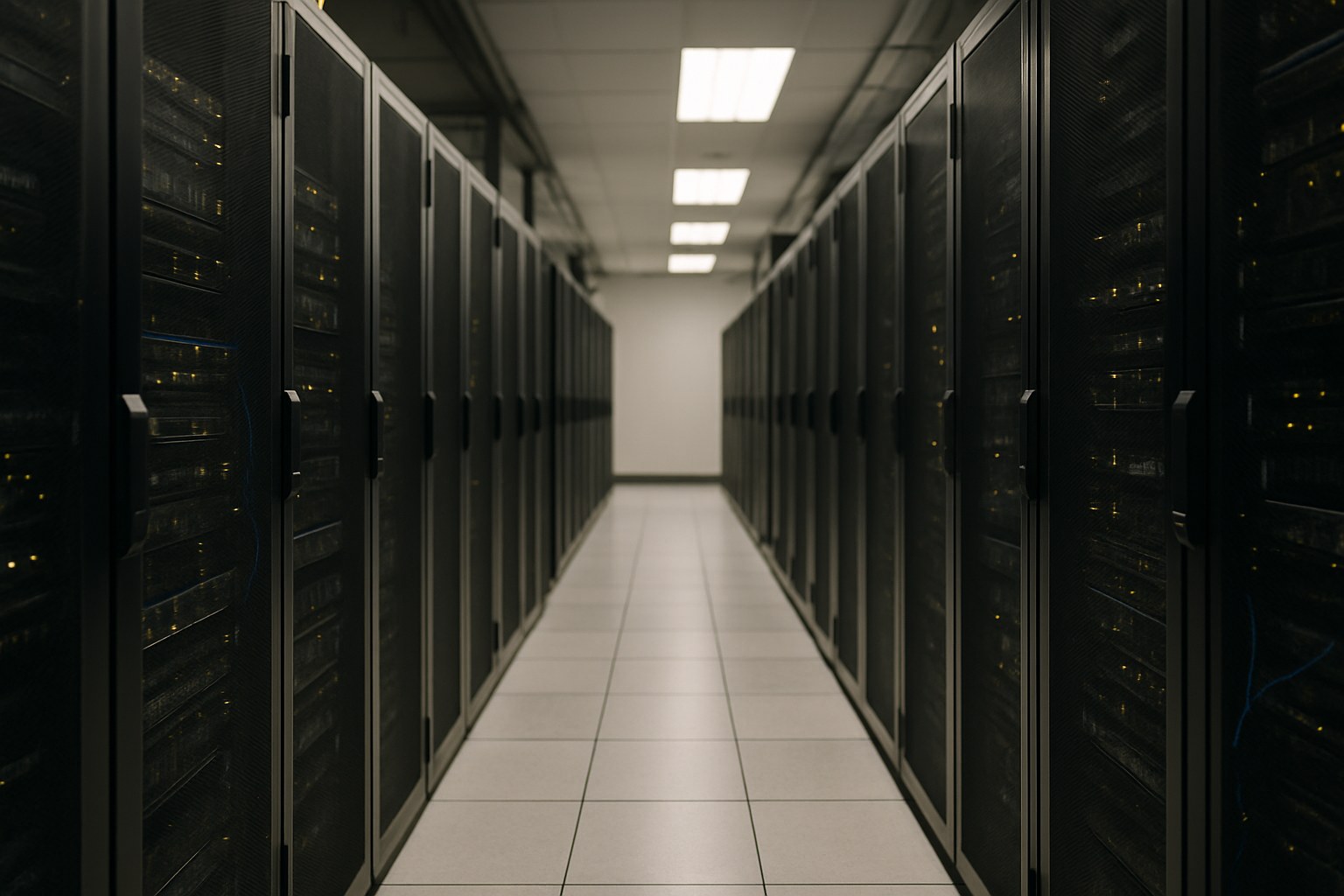
The market has spent two years obsessed with the chips inside AI data centers. Far less attention has gone to a physical problem that gets harder with every new generation of hardware: those chips run astonishingly hot, and packing thousands of them into a building creates a wall of heat that has to go somewhere. As AI racks push power densities to levels traditional air conditioning simply cannot handle, advanced cooling — liquid cooling, heat exchangers, thermal management — has quietly become one of the hard constraints on how fast the industry can grow. You cannot run the chips if you cannot cool them.
That is the gap SLB is buying into. Kelvion is not a speculative AI story; it is an established industrial manufacturer whose products are already specified into the infrastructure the AI era depends on. SLB’s logic is that demand for this kind of thermal hardware scales directly with the data-center build-out — and that a company with SLB’s engineering depth, global manufacturing footprint, and project-execution muscle can grow that business faster than Kelvion could alone.
What SLB actually gets
Kelvion is a real, sizeable business, not a bolt-on. For 2026, it is expected to generate $2.3–2.4 billion in revenue and $350–400 million in adjusted EBITDA, with its data-center segment alone accounting for roughly $1.2–1.3 billion of that top line — its largest and most strategic piece. Fold Kelvion in, and SLB says its combined data-center operation should clear $2 billion in revenue and about $300 million in adjusted EBITDA in 2026. In a single stroke, SLB turns a modest internal effort into a multi-billion-dollar business aimed squarely at a secular growth market.
- Price: ~$3.4B cash + ~$0.7B assumed debt = ~$4.1B total
- Sellers: Apollo-managed funds (majority), Triton-advised funds (minority)
- Kelvion 2026E: $2.3–2.4B revenue, $350–400M adj. EBITDA
- Kelvion data-center segment: ~$1.2–1.3B of 2026E revenue (its largest)
- Combined SLB data-center business: >$2B revenue, ~$300M adj. EBITDA in 2026
- Valuation: ~11× 2026E EBITDA pre-synergies, ~8.5× with ~$120M of expected annual synergies within three years
- Closing: first half of 2027, subject to regulatory approval; funded with cash
The bigger picture: buying a growth engine that doesn’t depend on oil
Step back and the strategic rationale comes into focus. SLB’s core business — helping energy companies find and produce oil and gas — is powerful but deeply cyclical, tied to commodity prices and drilling budgets that swing with the macro cycle. A data-center-cooling franchise offers something SLB’s core cannot: exposure to a secular growth trend that keeps expanding regardless of where crude trades. It lets SLB redeploy its industrial and engineering strengths into a market with a long runway, and it diversifies the company’s earnings toward a theme investors are eager to pay for. Importantly, SLB is doing this from a position of financial strength — it reaffirmed plans to return more than $4 billion to shareholders in 2026 even while funding the acquisition with cash.

The bull case, stated plainly
The constructive case is clean and forward-looking. SLB is a world-class industrial operator using its balance sheet to plant a flag in one of the most durable demand trends of the decade — the physical infrastructure of AI. It is buying an established, profitable business rather than betting on an unproven one, at a valuation that drops to a more reasonable ~8.5× EBITDA once synergies are counted. The deal is cash-funded, promised to be accretive within a year, and pairs a cyclical core with a secular growth engine — all while the company keeps returning billions to shareholders. If the data-center build-out continues at anything close to its current pace, SLB has just bought a front-row seat to it.
The honest part: the risks
None of that makes this a slam dunk, and the bear case deserves a fair hearing. First, the price is not cheap: ~11× EBITDA before synergies is a full multiple, and it relies on SLB delivering the ~$120 million of annual cost savings it is promising to bring the effective price down. Second, this is outside SLB’s core franchise — running an industrial cooling manufacturer is not the same as oilfield services, and integration risk is real. Third, nothing closes until the first half of 2027, and the deal still needs regulatory approval; a lot can happen to the AI-infrastructure narrative between now and then. Fourth, and most important for context, SLB’s core business is soft right now: second-quarter 2026 adjusted earnings per share fell about 26% year over year (GAAP EPS of $0.52, down roughly 30%) on $8.97 billion of revenue. And against SLB’s roughly $36 billion of annual revenue, a $2 billion data-center business — however exciting — is a slice, not a transformation. Finally, this was a pre-market move of about 1%, and pre-market moves can fade or reverse once the regular session opens.
What to watch from here
- How it trades at the open — whether the modest pre-market gain holds once real volume arrives, or fades.
- The core recovery — whether oilfield-services earnings stabilize after the Q2 decline, since that still drives the overwhelming majority of SLB’s results.
- Regulatory path — approvals and any conditions on the way to an H1 2027 close.
- Data-center momentum — signed contracts and capacity wins that show the combined cooling business is compounding, not just consolidating.
Bottom line: SLB just made a statement about where it thinks durable growth lives — not only in the ground, but in the server halls of the AI era. Buying Kelvion turns a small internal effort into a multi-billion-dollar data-center-cooling business overnight, cash-funded and promised to pay for itself within a year. It is not cheap, it does not close until 2027, and it sits next to a core business that is currently soft — so this is a strategic tilt, not an overnight makeover. But as a signal of how a legacy energy giant intends to stay relevant in an AI-driven world, Monday’s deal is worth understanding.
Get the next Top Stock Pick in your inbox — free.
Recent Top Stock Picks
This article is for informational and educational purposes only and is not financial advice and not a recommendation to buy or sell any security. Figures are based on SLB’s and Apollo’s public announcements of the Kelvion acquisition and other public market data, and are subject to change. The transaction is subject to regulatory approval and is not expected to close until the first half of 2027. Pre-market prices are volatile and may not reflect regular-session trading. Always do your own due diligence and consult a licensed financial advisor before investing. No compensation was received for this coverage.