ADVERTORIAL
VisionWave Holdings, Inc.
(NASDAQ: VWAV)
Building the AI Defense Stack for the New Age of Global Security



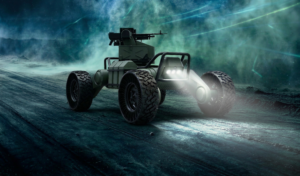
Defense technology is entering a new cycle—one shaped by artificial intelligence, autonomous systems, and the rapid evolution of global security threats.
Low-cost drones, electronic interference, and fast-moving autonomous platforms are redefining how nations protect borders, ports, transportation networks, and critical infrastructure. In this environment, success is increasingly determined not by brute force—but by the ability to detect earlier, decide faster, and respond with precision.
Recent global conflicts have accelerated the urgency around advanced security technologies. Developments across multiple regions have highlighted the growing importance of AI-enabled sensing systems, counter-drone technologies, and autonomous monitoring platforms capable of responding to fast-moving threats in real time.
Governments and security organizations are increasingly prioritizing technologies that can analyze large volumes of data, identify emerging threats quickly, and support rapid operational decision-making.
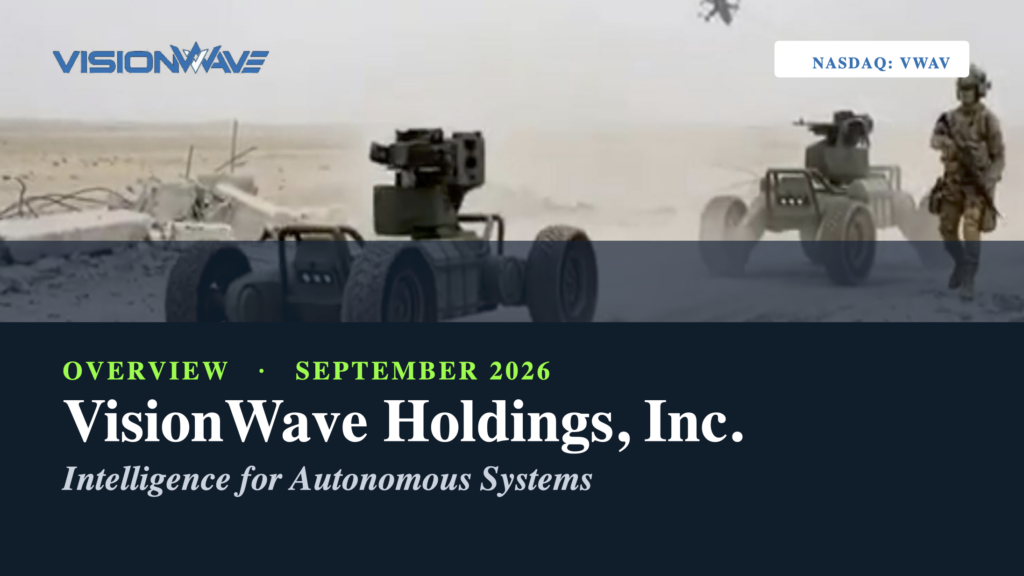
Why Defense AI Is Becoming a Multi-Billion Dollar Opportunity
Across the global security landscape, artificial intelligence is rapidly becoming one of the most important technologies shaping the next generation of defense and infrastructure protection systems.
Recent developments have demonstrated how low-cost drones, electronic interference, and autonomous technologies can rapidly alter operational environments. These developments have accelerated investment in systems capable of detecting threats earlier, processing intelligence faster, and supporting rapid operational responses.
As a result, governments and security organizations are increasingly prioritizing technologies that combine:
These technologies shorten the modern security decision cycle.
Detection → Classification → Decision → Response
This shift is driving demand for platforms capable of operating in complex environments where large volumes of sensor data must be analyzed and interpreted in real time.
Companies developing integrated platforms that combine AI, sensing technologies, and autonomous systems are increasingly positioned within one of the fastest-growing segments of the global security technology market
VisionWave’s Platform Strategy
This is the opportunity VisionWave Holdings, Inc. (NASDAQ: VWAV) is positioning itself to address.
VisionWave is developing an integrated technology platform combining autonomous systems, RF-based sensing technologies, artificial intelligence infrastructure, and high-performance computational acceleration designed for national security and infrastructure protection.
By integrating sensing technologies with AI-driven analysis and autonomous operational platforms, the company aims to shorten this cycle—allowing threats to be identified, interpreted, and addressed in seconds.
Capital market activity has also drawn investor attention. Public filings indicate that Goldman Sachs has crossed the 5% ownership threshold, bringing additional institutional visibility to VWAV.
VisionWave Technology Platform
VisionWave’s architecture is designed to reduce decision latency while improving situational awareness and operational autonomy across complex security environments.
The company’s platform is structured around four integrated technology layers.
1. Advanced Sensing & Detection
VisionWave is developing RF-based sensing technologies designed to detect aerial threats and interpret complex electromagnetic environments.
These technologies are increasingly relevant as drone activity and electronic interference affect global security systems.
Key initiatives include:
These sensing capabilities form the first layer of situational awareness, enabling early detection of emerging threats.
2. Artificial Intelligence & Data Processing
The second layer of VisionWave’s platform focuses on artificial intelligence and real-time data processing.
Security systems generate enormous volumes of sensor data. VisionWave’s AI architecture is designed to analyze this information quickly and support operational decision-making.
Capabilities include:
By integrating AI with sensing technologies, the platform moves from simple detection toward intelligent threat interpretation.
3. Computational Acceleration
VisionWave has also invested in high-performance computing infrastructure.
The company acquired the QuantumSpeed™ computational acceleration engine, designed to support the large-scale processing demands associated with advanced AI systems.
Current initiatives include:
These systems are designed to reduce the time required to process complex data streams—an increasingly important capability in real-time security environments.
4. Autonomous Systems Platforms
VisionWave is integrating sensing and AI capabilities into autonomous operational platforms.
These platforms allow detection, processing, and response capabilities to operate together across multiple domains.
Current systems include:
Management believes this integrated architecture allows sensing, AI processing, and autonomous response systems to operate together across land, air, and maritime environments.
VisionWave Strategic Technology Pillars
VisionWave’s long-term roadmap centers on three core technology pillars.
Autonomous Systems
Development of aerial and ground platforms designed for security monitoring, infrastructure protection, and defense applications.
RF Sensing & Counter-Drone Defense
Technologies designed to detect, track, and analyze emerging aerial threats and electromagnetic activity.
Artificial Intelligence & Computational Infrastructure
High-performance computing environments designed to support large-scale AI workloads and real-time operational decision systems.
Together, these pillars support VisionWave’s broader strategy of building a multi-domain security technology platform.
Strategic Expansion and Acquisitions
Since becoming publicly traded, VisionWave has expanded its capabilities through acquisitions and strategic initiatives.
Key developments include:
- Solar Drone Ltd. acquisition, establishing a wholly owned UAV subsidiary
- Acquisition of the QuantumSpeed™ computational engine
- Agreement to acquire 51% of C.M. Composite Materials, an aerospace-grade manufacturing company
- Expansion of sensing and autonomy initiatives through new technology partnerships
The company has also announced plans to expand its intellectual property portfolio, including patents associated with its ARGUS counter-drone technologies.
Investor Highlights: VWAV
Several operational milestones have supported VisionWave’s growth strategy approaches.
- $20 million senior financing completed, strengthening operational runway
- $10 million Statement of Work supporting QuantumSpeed development
- Acquisition of Solar Drone UAV platform
- Launch of VARAN unmanned ground vehicle
- Development of PS500000 autonomous ground vehicle program
- RF sensing collaboration with SaverOne
- Technology partnerships with PVML, Boca Jom, and Aiphex
Several operational milestones have supported VisionWave’s growth strategy approaches.
These initiatives support potential global deployment opportunities for the company’s sensing, AI, and autonomy technologies.
Institutional and Market Momentum
VisionWave has begun gaining increased visibility within capital markets.
Recent developments include:
The company has also strengthened governance with the formation of a global advisory board, including Eli Marom, former Commander of the Israeli Navy.
VisionWave’s Strategic Position
VisionWave sits at the intersection of four rapidly expanding technology sectors:
This convergence represents one of the most significant modernization cycles currently unfolding across global security systems.
Looking Ahead
Modern security infrastructure is increasingly defined by speed, intelligence, and autonomy.
In emerging global security environments, the advantage will belong to systems capable of seeing first, deciding faster, and responding with precision.
VisionWave’s strategy focuses on converting advanced technologies into deployable systems capable of moving through the lifecycle of:
Prototype → Evaluation → Operational Deployment → Scalable Production
As global security infrastructure continues evolving, companies capable of shortening the loop from sensing to action may help define the next generation of defense and security technology.
VisionWave is building toward that future.
VisionWave Holdings, Inc. (NASDAQ: VWAV) is a dual-market autonomous systems platform company developing AI-driven sensing, autonomy, and computational acceleration technologies for defense, homeland security, and commercial infrastructure applications.
The company’s mission is to connect defense innovation with civilian progress through shared technologies deployed across air, land, and sea.






Investor Insights.
Delivered Clearly.
Check Your Brokerage For The Latest News (VWAV)
This report is for information purposes only and is neither a solicitation nor a recommendation to buy nor an offer to sell securities. Top Stock Picks is not a registered investment advisor. Top Stock Picks is not a broker-dealer. Information, opinions, and analysis contained herein are based on sources believed to be reliable, but no representation, expressed or implied, is made as to its accuracy, completeness, or correctness. The opinions contained herein reflect our current judgment and are subject to change without notice. Top Stock Picks accepts no liability for any losses arising from an investor’s reliance on the use of this material. Top Stock Picks has been compensated up to twenty thousand dollars per month for coverage of VWAV by VisionWave Holdings. Top Stock Picks and its affiliates or officers currently hold no shares of this stock. Top Stock Picks and its affiliates or officers will purchase and sell shares of common stock of these stocks, in the open market at any time without notice. Top Stock Picks will not update its purchases and sales of these stocks in any future postings on Top Stock Picks’ websites, topstockpicks.co. Certain information included herein is forward-looking within the context of the Private Securities Litigation Reform Act of 1995, including, but not limited to, statements concerning manufacturing, marketing, growth, and expansion. The words “may”, “would,” “will,” “expect,” “estimate,” “anticipate,” “believe,” “intend,” ” project,” and similar expressions and variations thereof are intended to identify forward-looking statements. Such forward-looking information involves important risks and uncertainties that could affect actual results and cause them to differ materially from expectations expressed herein. *Top Stock Picks does not set price targets on securities. Never invest in a stock discussed on this website or in this email alert unless you can afford to lose your entire investment
Some of the content presented here was generated with the help of artificial intelligence, including insights from the AI agent James Denairo. This AI agent was trained using factual and publicly available information, including SEC filings, company decks, press releases, and other verified data sources. While designed to support accurate and timely financial commentary, the AI may still occasionally include errors, omit context, or misinterpret data.
This material is provided for informational and educational purposes only and does not constitute financial advice. Always verify key facts and figures independently and consult a licensed financial advisor before making any investment decisions.
Use of this content implies understanding that AI-generated insights, even when based on credible sources, are not infallible and should be used as part of a broader, well-informed decision-making process.